Offline with: Trend Forecaster, Amber Chow

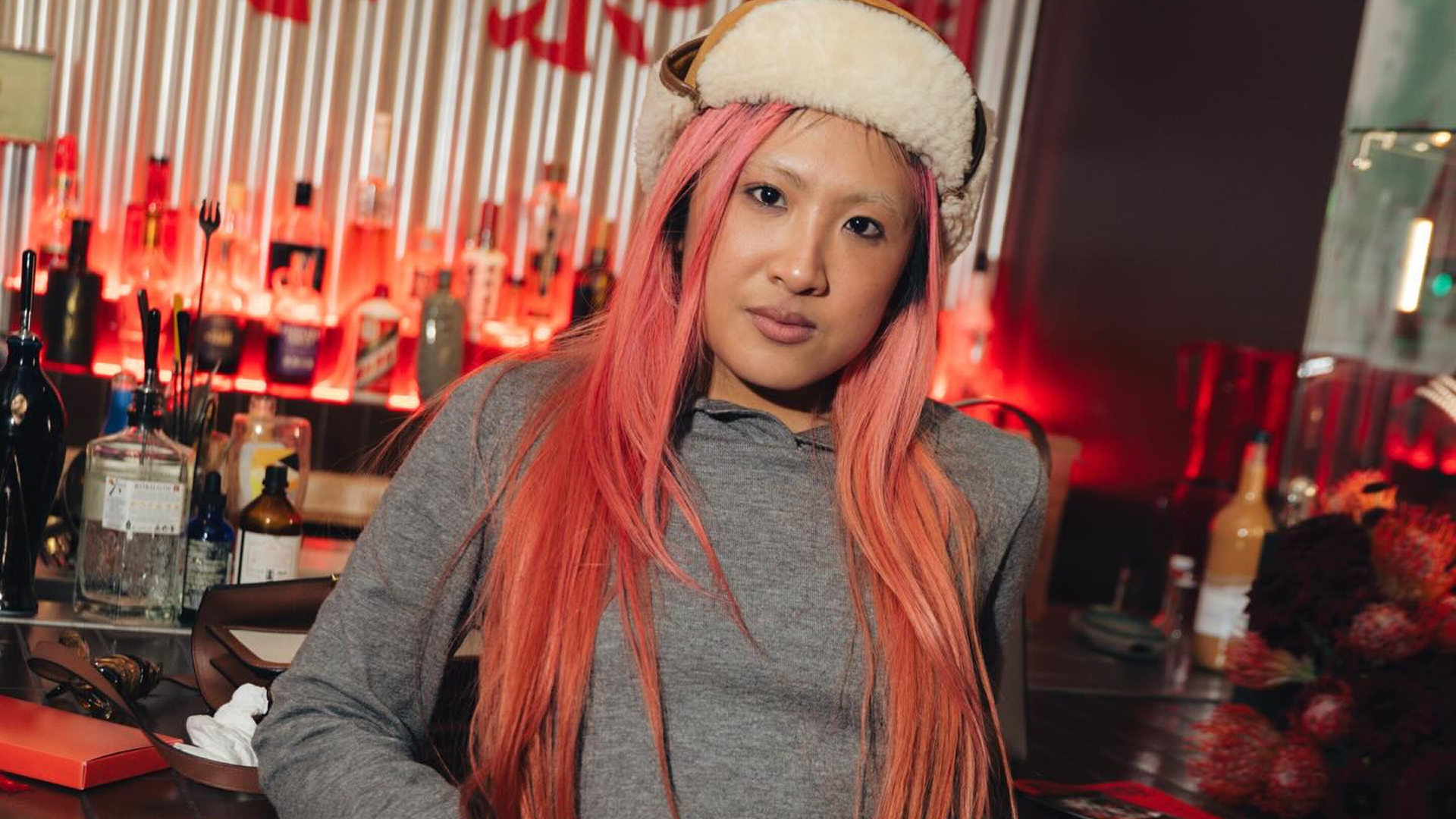
Amber Chow has built a career doing something the majority of people can't: spotting what's next before it happens, and then actually creating it herself. As a trend forecaster, and fashion content creator, she's contributed to some of fashion's most trusted titles including The Face, HypeBae and i-D, all while building her own, personal tone of voice online. Below, KOMI sat down with Amber to talk about consistency, creator culture, and why the light really is at the end of the tunnel.
Your creative process feels very instinct-led. Where does an idea actually start for you?
It starts with a thought, something that's caught my attention, and then I ask what caused it, whether it's impacting other corners of culture, whether other people are talking about it online. From there it's research: have publications covered it? Is it trending? Is it a conversation happening in the rooms around me, or just on my timeline?
What role does intuition play versus the more analytical side of your work?
For my own creative work, I'm quite intuitive, I live that life and then show my experience through everything I say in my videos. But when it comes to more technical work, that instinct needs to be backed up by something more rigorous. If you're writing a Substack or a newsletter, you need to provide a lot more insight and previous references, things you've read, seen, watched.
What does your content output actually look like week to week?
Social content feels like a bit of a rollercoaster, I can't always predict what will land. I aim for two carousel posts a week, breaking topics down into more visual, digestible formats that tend to perform better, alongside one or two talking-head videos. TikTok is a different game altogether; engagement is lower so I mainly stick to talking videos and more casual, fun vlogs there. And honestly, the packaging takes real work, in this attention economy everything is about marketing and presentation. I have fun and interesting thoughts, but making them digestible and visually appealing takes hours of editing on Canva and CapCut.
You wear a lot of hats — forecaster, consultant, creator. How do they all connect?
Everything in culture is intertwined, so organically all the topics I talk about can be translated across each of the jobs I have. They feed into each other constantly.
What do people get wrong about trend forecasting?
A big misconception is that trends are only just starting when people notice them, but actually they started quite a while ago, sometimes a year or even two years before. The polka dot micro-trend is a perfect example. Everyone felt like it was "new" when it hit the high street, but it had been percolating in fashion circles for two to three years prior. Trends are around for a long time before they hit mainstream retail.
Social media has also fundamentally warped this cycle. Platforms amplify a trend so aggressively that they end up shortening its lifespan. Unfortunately, they create and kill them.
What's been your pinch-me moment so far?
Interviewing Quen Blackwell was a definite pinch-me moment. I've been a huge fan since I was 13 watching her on Vine, so to have that face-to-face moment with her was actually insane.
A close second was hosting The Content Cloud Network's Cloud Talks panel, where I interviewed all three panellists live on stage. I'd previously only been a panellist myself, so it was a big shift. I'm often critical of celebrity "journalists" who clearly aren't suited to interviewing, so I knew I had to hold myself to the same standard. The prep paid off, and it confirmed that presenting and hosting is something I want to pursue much more.
Tell us about the Substack — that's a different mode entirely.
I started it about two years ago, but had to pause when I took on an editor role at Hype Bae — they didn't allow me to carry it on alongside the job, which was kind of crazy in my opinion. After a year-long gap I relaunched it about two months ago and I've been back in the rhythm since.
For someone wanting to build a career at this intersection of fashion, culture and content, what's your advice?
Don't give up, and be as consistent as possible. You learn so much from every job you do, and in fashion every single role will always help the next one. Don't be discouraged by rejection — it's part of it. A cheesy metaphor I love is: in order to get to the light at the end of the tunnel, you must go through it.
And how do you balance building your own brand alongside client work?
It comes down to organisation. Your own brand is the priority and the long game, but client work pays the bills and builds your skills simultaneously. Managing the two efficiently, and being realistic about your time, is key to making both work.
MORE FROM THE FEED
UNLEASH THE POWER OF CREATOR